
Beyond the medal: What WorldSkills can teach Uganda about the future of TVET
For Uganda, participation in the WorldSkills International Competition should be about more than sending young people to compete for medals. It is an opportunity to examine how other countries prepare their young people for the world of work, how industry shapes technical training, and how technology, standards and investment can transform a country's productive capacity.
This is a perspective informed by first-hand experience.
Mr Wamani Godfrey Bagamba, Manager, Quality Assurance at the Uganda Vocational and Technical Assessment Board (UVTAB), who accompanied the UVTAB Board members to Shanghai, has participated in WorldSkills competitions at both international and continental levels, including the WorldSkills Competition in Kazan, Russia, in 2019, Lyon, France, in 2024, and a continental skills competition in Namibia. His experience has offered a close view of both the possibilities and the gaps between participating in a global skills competition and preparing a workforce capable of competing in a global economy.
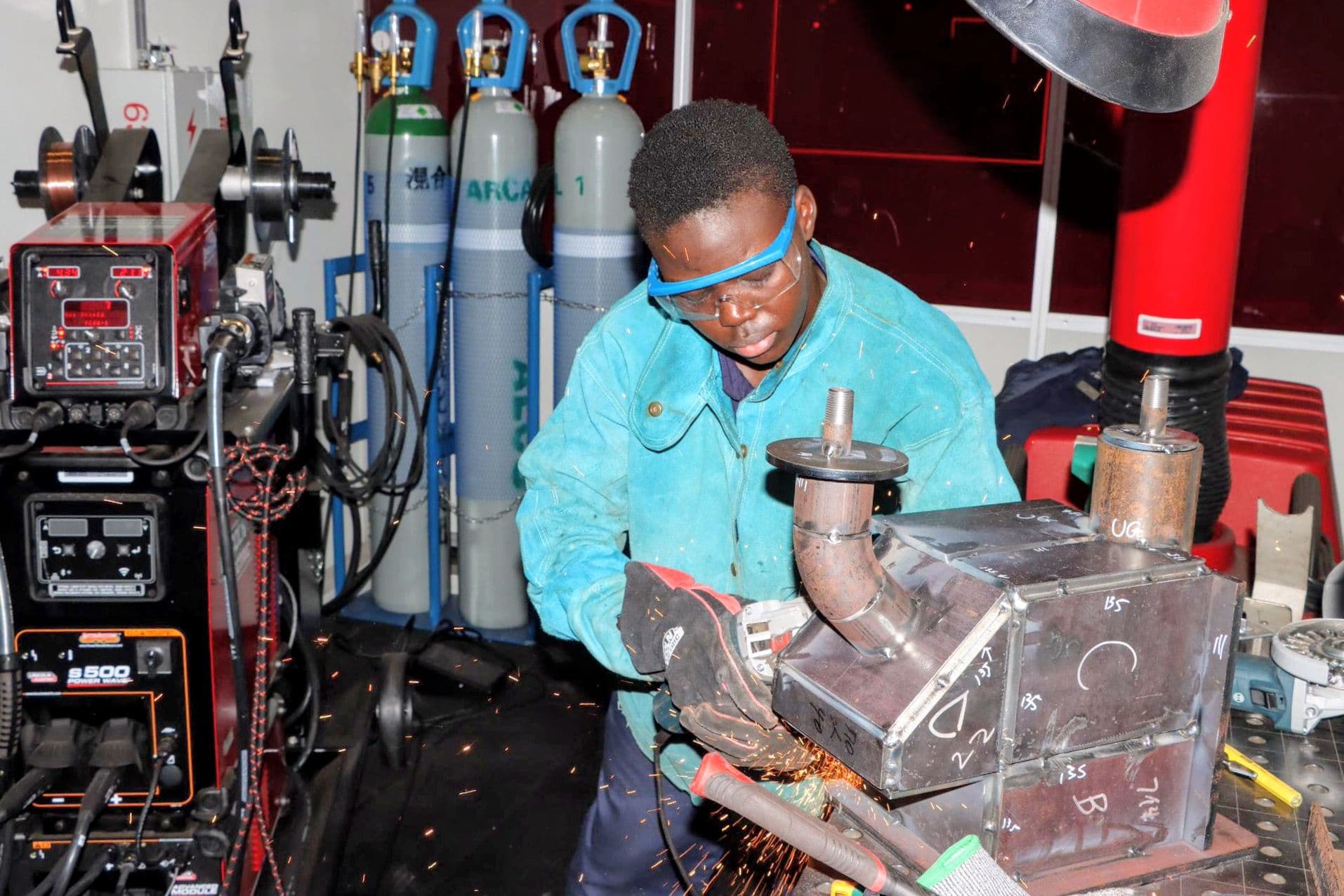
As Uganda is represented at the WorldSkills Competition in Shanghai, China, from 22nd to 27th September 2026, the country is showcasing its technical and vocational talent on one of the world’s most prestigious skills platforms. Uganda’s competitors include Terrhan Paul Lugobe from the Hotel and Tourism Training College (HTTC), competing in Cooking under code 35; Elizabeth Mirabel Mutoro from Arua Technical Institute, competing in Welding Skills under code 10; and Flavia Nakaayi from Kabale School of Comprehensive Nursing, competing in Health and Social Care under code 41.
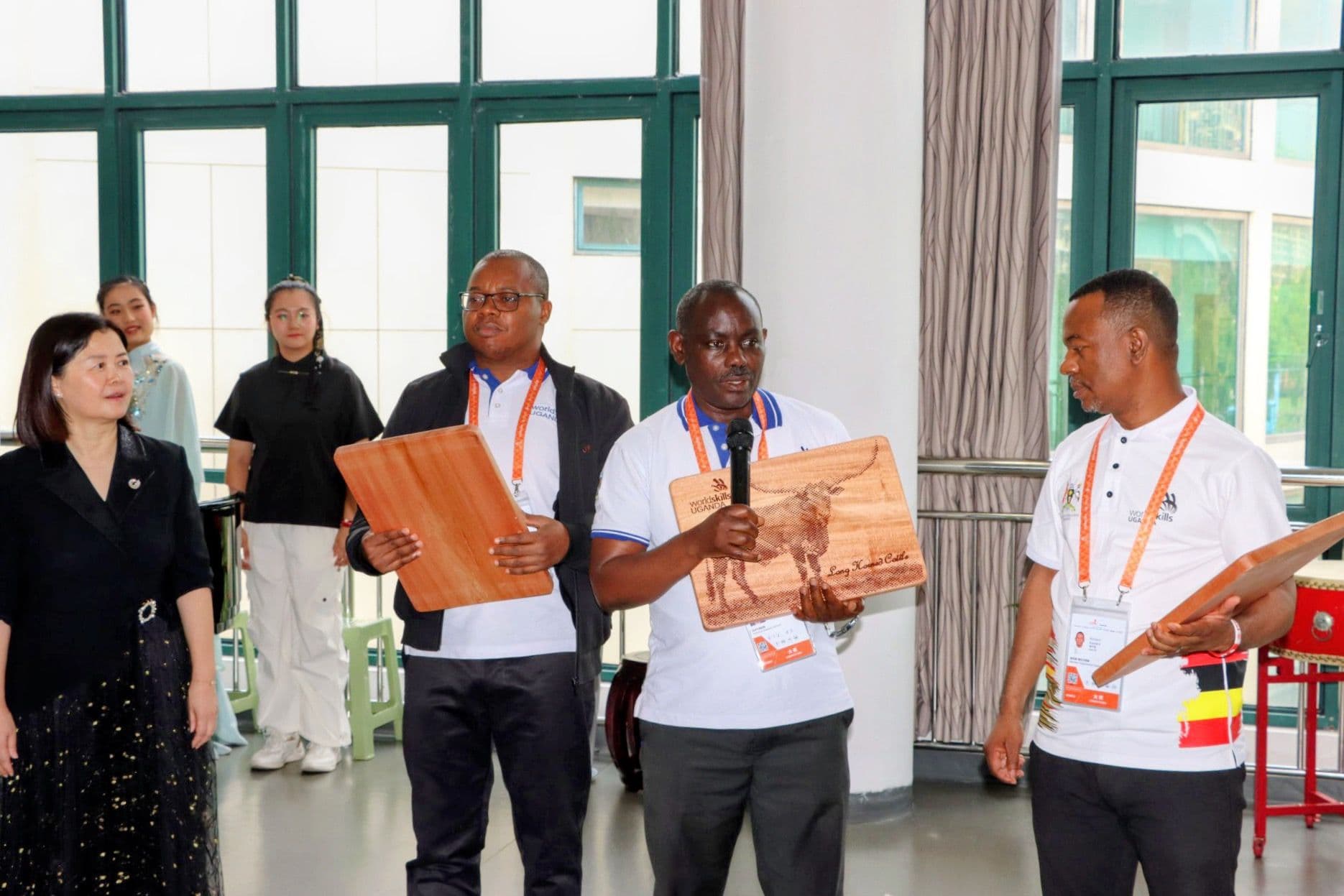
The Ugandan delegation also includes representatives of Government and Ministries, including Minister of State for Primary Education, Hon. Phyllis Chemutai, Chairperson of the TVET Council, Ms. Allen Kagina, and Executive Director of the TVET Council, Mr. Moses Kasakya. UVTAB is represented by Board Members Mzee Obadiah Lalobo and Ms. Rose Nakafu, accompanied by Mr. Wamani Godfrey Bagamba, Team Lead Uganda, institutional principals, among others.
Their presence at WorldSkills reflects a collective national commitment to strengthening Uganda’s TVET system and positioning skills development at the centre of socio-economic transformation. The experience therefore offers an important question: What does Uganda bring home from WorldSkills beyond medals?
WorldSkills as a learning platform
“WorldSkills showcases technical and vocational skills much like sporting competitions showcase athletic talent. Competitors demonstrate their abilities against clearly defined international standards, using the technologies, materials, precision and procedures required in their trades,” Bagamba explained.
But behind the competition is a bigger lesson. “Our competitions are known across the world for setting the benchmark for skills excellence,”- CEO of WorldSkills, David Hoey. WorldSkills brings together young professionals, experts, judges, educators, industry representatives, policymakers and technology players. It provides an opportunity to observe emerging technologies, understand international occupational standards and see how different countries are preparing their workforces for the future.
For Uganda, participation should therefore be accompanied by deliberate efforts to ensure that competitors, trainers, assessors, policymakers, industry representatives and other stakeholders return with knowledge that can strengthen the country's skills system. “The objective should be to return with more than medals, with lessons that can influence curriculum development, assessment, technology, industrialisation, investment and skills development,” he added.
Uganda’s delegation should therefore advocate incorporating competition standards, training methods, and assessment systems into vocational education and lifelong skills training.
Technology and the skills of tomorrow
One of the strongest lessons from Bagamba's experience is the importance of technology. A competitor may possess the required technical competence but struggle when exposed to equipment or materials they have never used before. International competition has demonstrated how prior exposure to modern technologies can give competitors an advantage.
He said competence cannot be separated from the technology through which that competence is applied. Training institutions therefore need access to contemporary equipment, while trainers require continuous exposure and upgrading. It is not enough to install sophisticated machinery if trainers and learners cannot confidently operate it. More importantly, Uganda must prepare learners not only for the technologies being used today, but for those likely to dominate the workplace several years into their careers.
This presents an important challenge for TVET and for UVTAB: Are we assessing the skills Uganda's industries will need tomorrow, or simply certifying the skills they needed yesterday?
“WorldSkills also demonstrates the importance of standards, Bagamba pointed out. Competitors are assessed against defined criteria covering accuracy, quality, creativity, precision, safety and compliance. The principle extends far beyond the competition floor. Whether someone is constructing a building, installing an electrical system, fitting pipes, preparing food, welding metal or developing a digital solution, standards determine whether the final product is reliable and fit for purpose.
“For UVTAB, whose mandate centres on competence-based assessment and certification, this is fundamental, he said. A certificate should signify more than the completion of a course. It should assure that an individual can demonstrate the competence required to perform a job accurately, safely, consistently and to the expected standard, and that is at the heart of UVTAB's philosophy, “Assessment for Employable Skills,” he emphasized.
WorldSkills reinforces another critical principle: assessment cannot be separated from training. Competence-based assessment is ultimately about determining what a person can actually do. This requires transparent, consistent, and fair assessment anchored in clearly defined competencies. The curriculum should respond to occupational requirements, training should develop the required competencies, and assessment should establish whether those competencies have been achieved.
This is also where industry must move from the sidelines to the centre. Globally, industry is deeply connected to skills development because the competencies demonstrated by competitors ultimately reflect an economy's workforce and productive capacity. Uganda needs stronger partnerships between training institutions and employers so that learners and trainers have meaningful exposure to modern equipment, production processes, and workplaces. Industrial attachment should go beyond a formal requirement and provide exposure to the technologies and standards learners will actually encounter. This aligns directly with UVTAB's employer-led approach to TVET curricula and its responsibility to assess and certify competences for the world of work.
UNESCO defines “Demand-driven TVET” to mean a system responsive to the workforce challenges and needs defined by employers. This is evidenced by the skills represented at WorldSkills extending beyond the traditional image of blue-collar work. Health and Social Care, Dental Prosthetics, and other service-oriented competitions reflect growing demand for skilled workers in healthcare, consumer services and other urban industries.
TVET is central to industrialisation
The lessons from WorldSkills therefore point to a much larger national question: Uganda cannot industrialise without a skilled workforce capable of operating, maintaining, adapting and developing the technologies that drive production. “TVET should therefore not be regarded as a second-choice pathway for young people who do not enter university. It is a strategic pathway for developing the technicians, artisans, craftspeople, technologists and innovators required to build an economy,” Bagamba noted.
The conversation must move beyond how many people Uganda trains to what those people can actually do. What can they produce? What problems can they solve? What technologies can they operate? What can they innovate? And how much value can their skills create for Uganda? These questions are directly connected to UVTAB's mandate of assessing and certifying competences for the world of work.
From global exposure to local impact
International exposure is valuable only when it produces local impact. Knowledge gained in Kazan, Lyon, Namibia and now Shanghai should not remain with individual competitors, trainers or officials. It should find its way into Uganda's training institutions, assessment centres, curricula, workshops and workplaces.
A competitor can return with knowledge of a new technology. An assessor can return with a better understanding of international assessment practices. A trainer can adopt new approaches to preparing learners. An institution can identify opportunities for collaboration. And UVTAB can use global lessons to strengthen standards, assessment, and quality assurance. This is how international participation becomes technology exposure, knowledge transfer, and ultimately national development.
The real measure of success
In conclusion, therefore, WorldSkills provides Uganda with a mirror; it shows what young people can achieve when they are trained, exposed to technology, supported by industry and assessed against clear standards. It also exposes the work that remains. The question should therefore not simply be whether Uganda's competitors return with medals.
Will training institutions adopt better technologies? Will trainers be upgraded? Will industry become more involved? Will assessment standards become stronger? Will investment in skills increase? Will young people see technical careers as prestigious and rewarding? And will international exposure translate into local innovation and industrial growth? Therefore, Uganda’s participation in the WorldSkills competition will make meaning when the ultimate aim of creating and maintaining a direct cycle between industrial demand and training and assessment development is achieved by companies identifying the skills they need, training institutions responding, workers gaining recognized qualifications, and those skills being rewarded in the workplace. If that connection can be strengthened beyond the competition itself, WorldSkills Shanghai will leave a legacy more important than the medals awarded.
“These are the real measures of success,” Bagamba noted.
Uganda's participation at WorldSkills Shanghai 2026 is therefore more than a moment on the global competition calendar. It is an opportunity to showcase Ugandan talent while learning from the world's best - and to strengthen a TVET system capable of producing competent, adaptable, and innovative workers. Ultimately, the most valuable medal may not be the one brought home by an individual competitor. It may be the transformation that follows when Uganda takes the lessons of global competition seriously and invests in the people, technologies, standards, assessment systems and industries that will determine its future.
Because the true measure of participating in WorldSkills is not only whether Uganda wins a medal, but whether the experience helps build a TVET system - and ultimately a workforce - capable of competing confidently in the global economy.
More photos